Hey North Florida, Dr. Cam here.
Sometimes patients come in concerned because they’ve been told they have “Degenerative Disc Disease” or DDD. The word “disease” can sound alarming, making people feel like they have a serious condition that will only get worse. While DDD can cause pain and stiffness, it’s helpful to understand what it usually means.
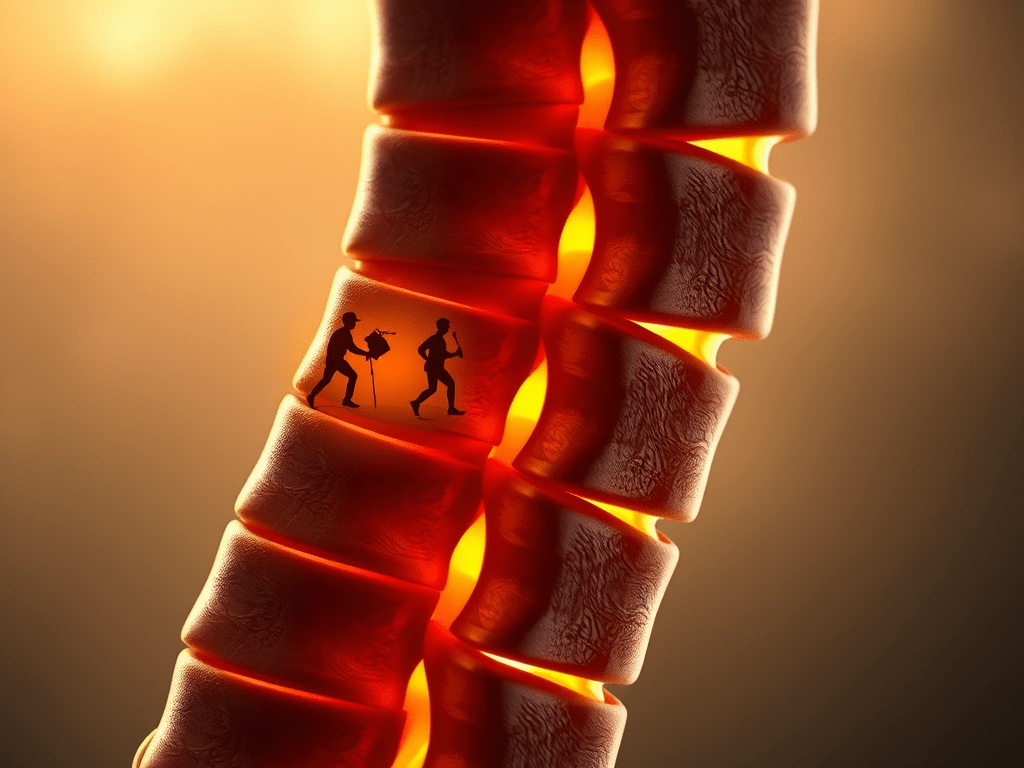
Think of it less as a specific “disease” and more as a description of the normal “wear and tear” changes that happen to spinal discs over time, often accelerated by cumulative stress. Just like tires on a car wear down with mileage, our spinal discs can lose hydration, thin out, and develop small tears or changes over the years.
Considering my own history – the physical labor on the farm in Washington, the intense forces of throwing heavy implements in track and field, the demands of military service – it’s no surprise that my spine has seen its share of wear and tear, contributing alongside my herniated discs to chronic back and neck issues. It’s a process many active people experience to some degree as they age.
What Does DDD Mean for You?
These degenerative changes can sometimes lead to:
- Pain: As discs thin, vertebrae can sit closer together, potentially stressing facet joints (the small joints at the back of the spine).
- Stiffness: Reduced disc height and joint changes can limit flexibility.
- Nerve Irritation: Bone spurs (osteophytes) can sometimes form as part of the degenerative process and may irritate nearby nerves.
- Increased Risk of Herniation: Degenerated discs may be more prone to bulging or herniating.
But here’s the important part: Not everyone with degenerative changes on an X-ray or MRI experiences pain. Many people have significant DDD findings and feel perfectly fine. The goal isn’t necessarily to reverse these changes (which isn’t usually possible), but to manage symptoms and maintain function.
How Chiropractic Helps Manage DDD:
While we can’t turn back the clock on wear and tear, chiropractic care can be very effective in managing the symptoms associated with DDD:
- Improving Joint Mobility: Gentle adjustments help maintain or restore motion in the facet joints and surrounding spinal segments, reducing stiffness and pain caused by restriction.
- Reducing Nerve Irritation: By optimizing alignment, adjustments can help alleviate pressure on nerves potentially irritated by disc thinning or bone spurs.
- Decreasing Muscle Tension: Keeping the spine moving well helps associated muscles stay more relaxed.
- Maximizing Function: The focus is on improving your mobility, reducing pain, and allowing you to stay active despite the degenerative changes. For me, managing my own disc and degenerative issues means focusing on function over chasing a “cure.”
If you’ve been diagnosed with DDD, don’t get discouraged. Let’s focus on keeping your spine moving well so you can continue enjoying life here in North Florida!
Visit www.drcam.rocks to schedule a consultation and discuss how we can help you manage DDD symptoms.
Keep moving,
Dr. Cam
 Cameron Stewart, D.C.
Leave a comment