Hey North Florida, Dr. Cam here.
Over the past few weeks, I’ve shared bits about my background – the farm, track and field, my time as a Navy Corpsman. I’ve also mentioned dealing with my own chronic pain. Today, I want to get a bit more specific about one of the main culprits: multiple herniated discs.
Hearing that diagnosis can sound scary. I remember feeling worried about limitations, potential surgeries, and whether I’d be able to stay active – things I loved doing, like playing with my kids or simply getting through a demanding day without significant pain.
So, What is a herniated disc?
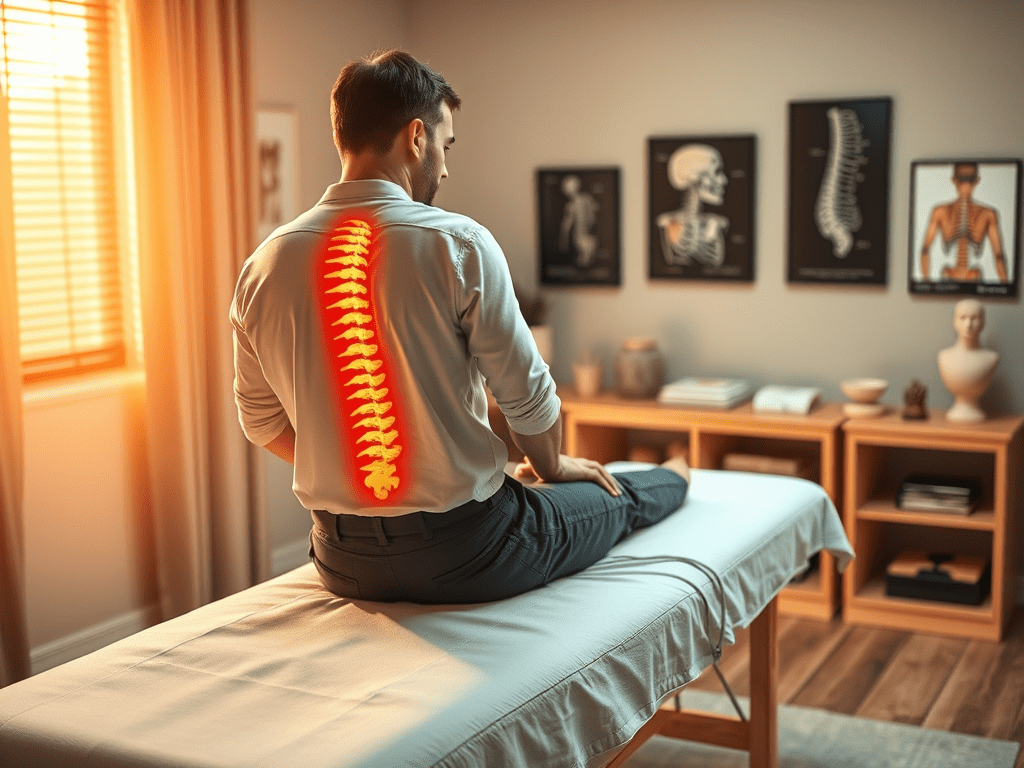
Imagine your spine has cushions between each vertebra – these are your discs. They have a tough outer layer and a gel-like center. A herniation happens when some of that gel-like center pushes out through a tear in the outer layer. This bulge can press on nearby nerves, causing pain (often intense!), numbness, tingling, or weakness – sometimes locally in the neck or back, and sometimes radiating down an arm or leg (like sciatica, which we’ll discuss soon).
How did mine happen? It likely wasn’t one single event, but rather the cumulative effect of years of physical stress: the heavy lifting on the farm, the intense twisting forces in throwing events, the physical demands and potential impacts during military service, and probably some underlying genetic predisposition. It became a chronic issue I had to learn to manage.
Finding Relief Beyond Medication or Surgery:
While surgery is sometimes necessary, it wasn’t the first route I wanted, nor is it always the best initial approach. My own experience heavily relied on conservative care, with chiropractic playing a central role. How does it help with something like a herniated disc?
- Reducing Nerve Pressure: Gentle, specific adjustments can help to slightly mobilize the spinal segments around the affected disc. Techniques like flexion-distraction (a specialized table movement that gently stretches the lower back) can create a subtle negative pressure, potentially helping to draw the bulging material away from the nerve root.
- Improving Spinal Mechanics: By restoring better movement to surrounding joints, chiropractic care can reduce compensatory stress on the injured area and tight muscles.
- Pain Management: Reducing nerve irritation and muscle spasm naturally helps alleviate pain.
- Supporting Healing: Improving alignment and function promotes a better environment for the body’s natural healing processes.
Chiropractic care, combined with specific exercises and lifestyle modifications, allowed me to manage my herniated discs, control the pain, and maintain a high quality of life without immediately resorting to more invasive options. It taught me firsthand the power of conservative care and addressing the root mechanics.
If you’re dealing with disc issues or nerve pain, know that you have options. Let’s explore if chiropractic care can be part of your solution.
Visit http://www.drcam.rocks to learn more and schedule a consultation. You don’t have to just live with it.
In health,
Dr. Cam
 Cameron Stewart, D.C.
Leave a comment